How to Maintain a Human Brand Voice While Using Facebook AI Automation

Keeping a human touch with Facebook AI automation has become a major headache for brands trying to make a mark across modern social media landscapes. Automation tools backed by machine learning are now handling ad delivery, tweaking ad placements, analysing engagement data, and churning out large volumes of content. However, all these tools are speeding up performance marketing – but they can also mess up message consistency big time if you don’t keep a close eye on them.
For Karma Media, the focus isn’t on automation for its own sake – we’re all about building controlled-growth systems. AI tools do help us crunch social media analytics, track how our audience behaves and spot trends in campaign performance, but at the end of the day, brand positioning has to come from the human touch. If it doesn’t, automated messaging can end up watering down your brand tone across ads, landing pages and remarketing campaigns.
In today’s always-changing marketing world, businesses are increasingly relying on AI-powered platforms, predictive analytics and automated systems to optimise their campaigns. And yeah, these things can make campaigns a heck of a lot more efficient. But only if you know how to use them in a way that doesn’t turn your brand identity into mush.
Contents
- 1 Campaign Structure That Protects Brand Voice
- 2 Funnel Alignment Between Ads and Conversion Pages
- 3 Creative Testing That Preserves Brand Tone
- 4 Data Accuracy & Attribution Reliability
- 5 The Financial Discipline Behind Automated Scaling
- 6 Scaling Without Audience Fatigue
- 7 Social Listening & Customer Insight
- 8 Conversational Automation and Customer Interactions
- 9 Responsible Automation and the Right Stuff
- 10 Predictive Intelligence for Making Better Plans
- 11 Strategic Conclusion
- 12 FAQ
- 12.1 Can automation handle social media campaigns all by itself?
- 12.2 Why do automated advertising campaigns sometimes come across as completely off-brand?
- 12.3 How can you keep your message authentic when you’re using all these AI tools?
- 12.4 Why does getting the tracking right matter for that automated optimisation?
- 12.5 How do you get the most out of audience insight in automated marketing?
Campaign Structure That Protects Brand Voice
Automation does its thing best when your campaign architecture makes a clear distinction between the algorithm doing its thing and the messages you want to get across.
Well-designed campaign structures break down advertising activity by the different stages your buyer goes through. This way, the algorithm can get on with sorting out the audience segments, and you can be sure your message is coming across consistently.
Campaigns usually have a few layers: there are campaigns to reach new customers, to educate warm traffic, and to drive sales. And let’s not forget about retention campaigns designed to look after existing customers – each one delivers a different level of messaging but still keeps your brand tone on track.
When we do an audit on an underperforming account, one of the most common problems we see is that messaging is all over the shop – automated systems are churning out ads alright, but without any proper segmentation, they’re either sending the wrong messages to the right people or the right messages to the wrong people.
One project we worked on with some Sydney-based Facebook specialists is a great example of this: by restructuring the campaign to ensure messaging matched what we knew about our audience, the algorithm suddenly picked up on engagement patterns, and the cost per acquisition dropped like a stone.
Automation is only going to deliver when you define the communication framework upfront – and that means getting the humans on board.
Funnel Alignment Between Ads and Conversion Pages
Automation can’t bail you out if your funnel’s broken.
When an ad promises one thing, but the landing page delivers something else entirely, it’s no wonder users get turned off, and conversion rates go south. This is a problem that crops up when companies put automated delivery ahead of keeping their messaging consistent – it’s a recipe for disaster.
A solid funnel keeps the narrative running smoothly from the very start to the final call to action. The ad sets the scene, introducing a problem or opportunity. The landing page then expands on the context, perhaps with informative blog posts or authoritative sources to support it. And finally, the conversion page presents the offer clearly and removes any friction in the purchasing decision.
We’ve seen this happen time and time again in our audits at Karma Media: funnel misalignment is the reason a campaign declines, even with strong traffic metrics. We’ve used social listening to get a handle on what customers are really concerned about online, then refined the messaging to match.
Working with Facebook ad specialists in Sydney, we refined the funnel so the advertising language lined up with the questions customers were actually asking online. Once that happened, automated optimisation started to work for us, rather than against us.
Creative Testing That Preserves Brand Tone
Meta’s advertising system is now placing more weight on creative signals than on targeting complexity. And the bottom line is, performance depends on how well an ad grabs attention and communicates value.
But automating creative without a clear direction can easily water down the brand voice.
The high-performers treat creative development as a proper content strategy rather than just mucking around with random ideas. Each new creative variation is designed to test a specific messaging idea, while maintaining the same brand personality throughout.
Common variables are the structure of the hook, how you frame the problem, any proof elements, and how the whole thing is presented visually. Videos are especially effective at conveying emotion and authority, making them a key driver of campaign performance.
Automation sends the creatives based on engagement signals, but humans need to make sense of the results using social media analytics and behavioural insights.
Here’s an instance: if one creative variation really knocks it out of the park with click-through rates while still maintaining a high conversion efficiency, you can bet the cost per acquisition will plummet. The reason is that good messaging just works; it doesn’t need an algorithm to make it happen.
Automation’s role is to get the creatives in front of the right people. The human role is to tell the story.

Data Accuracy & Attribution Reliability
Automation relying on good data is crucial. Without proper attribution, optimisation systems are just chasing wild goose chases of bad signals.
Many ad accounts are blindly relying on platform reporting. This only gives them a partial view of how their actual revenue is performing.
A solid tracking framework will typically pull data from multiple sources. That means you’re looking at the Conversion API, server-side tracking, and even CRM data connections to ensure those algorithms receive accurate signals. When attribution accuracy improves, those analytics automation processes start to hone in on real revenue events rather than just superficial engagement metrics.
Not long ago, Karma Media took a close look at one of its latest campaigns and found some major discrepancies between what the platforms reported and the actual sales data it could see. After sorting out the event mappings and verifying the conversion events, the algorithm began to optimise for genuine purchase behaviour.
The insights they gleaned from review data and behavioural patterns across social media platforms enabled them to further refine their messaging for that audience. Talking with local facebook ads specialists Sydney helped them identify regional engagement trends, which supported key improvements to their campaign targeting logic.
When you provide good signals, automation becomes a powerful optimisation engine rather than a source of confusion.
The Financial Discipline Behind Automated Scaling
Automation doesn’t make the need for a financial strategy just go away.
A lot of businesses will just throw more money at ad budgets once a campaign starts to do well, without stopping to think if it’s really profitable. Without evaluating profitability, scaling can just end up eroding margins.
The most reliable way to evaluate that is with a contribution margin analysis, which shows the remaining profit after you’ve taken out advertising and operating costs from revenue.
If a campaign generates a lot of sales volume but leaves little margin after costs, scaling it further can pretty much guarantee you’ll do some damage to your profitability. Conversely, campaigns that are producing healthy margins can probably be safely expanded.
Automation can identify performance patterns, but when it comes to deciding how to allocate your budgets, you need human decision-making.
Scaling Without Audience Fatigue
Automated advertising systems will expand rapidly if a campaign is doing well. The problem with that is it often means pushing ads into audiences that aren’t even qualified to see them.
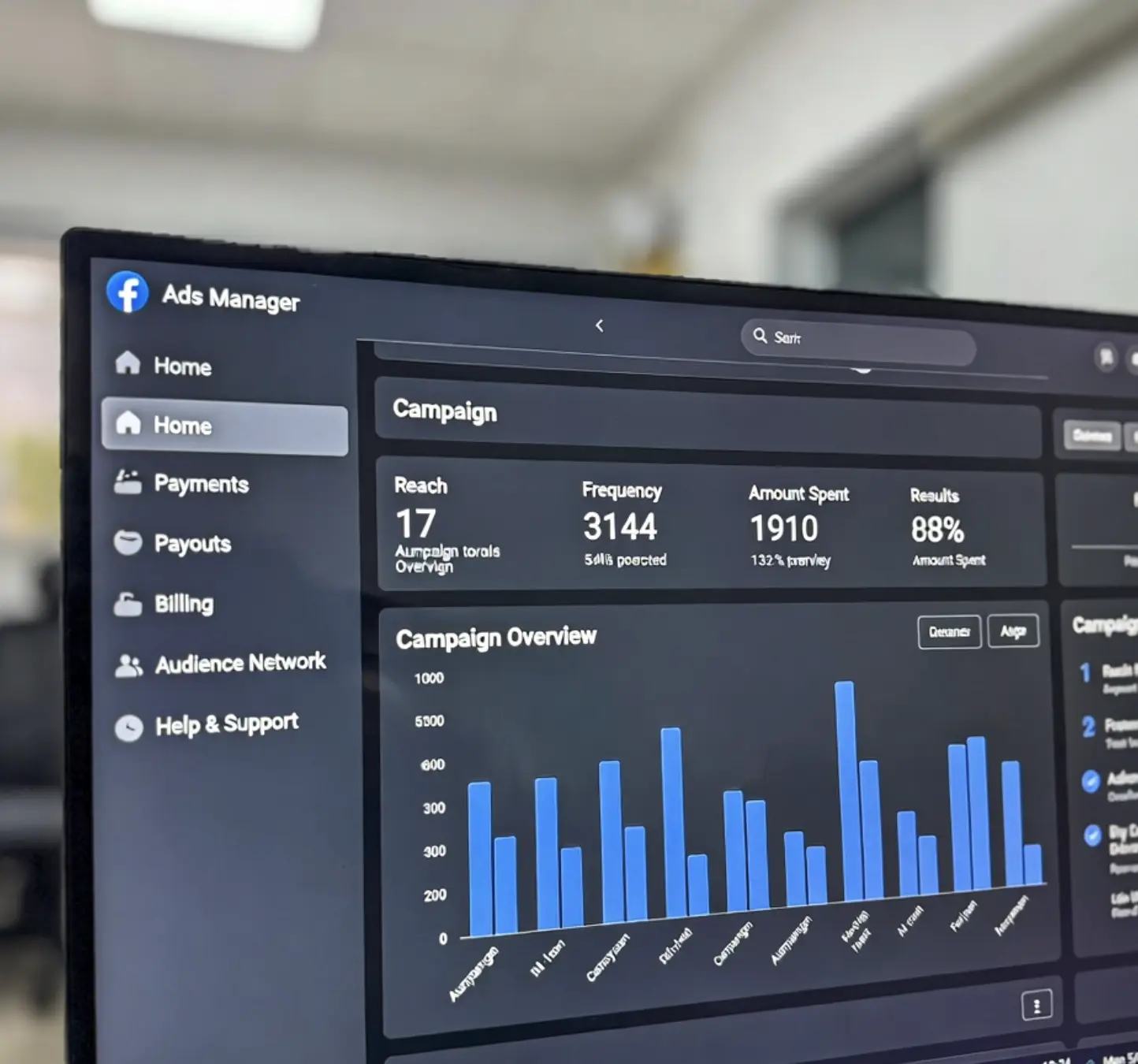
Then, when audience saturation sets in, engagement metrics start to drop. You get frequency up, click-through rates start dropping, and your acquisition costs go through the roof.
So when it comes to scaling your campaigns, you need to make sure you’re continuously refreshing your creative and expanding out to new audiences. Introducing new angles to your messaging keeps everything relevant, while introducing additional targeting segments can bring in fresh traffic sources.
We had a case in one of our scaling projects that went off the rails because of creative fatigue – turns out the messaging had been shown repeatedly to a pretty narrow audience segment. Once we introduced new messaging angles and expanded the targeting, campaign stability returned.
Automation can get campaigns out the door quickly, but it’s the creative innovation that really sustains performance.
Social Listening & Customer Insight
More and more marketing teams are relying on social listening tools to understand what their audiences are saying.
These tools ingest large volumes of public data, including brand mentions, customer reviews, and discussion threads scattered across multiple platforms. By analysing that data, businesses can gain a deeper understanding of how their audience perceives them.
Understand these signals, and you can start adapting your messaging to real feedback, rather than just relying on your own internal assumptions.
For example, if you see recurring themes in your review data, that could indicate customer concerns you should address directly in your ad messaging. By incorporating those insights into your messaging, you can strengthen credibility and get better engagement.
Automation can process the data fast, but strategic interpretation still falls to a human.
Conversational Automation and Customer Interactions
Automation is significantly impacting how brands handle online conversations.
Many businesses now use automated response systems to handle day-to-day questions on social media. These systems use a bit of a script to help people through the most common questions, product queries or service requests.
Using automation can really speed up response times, especially for businesses that get a ton of messages.
But here’s the thing: even with automation, you still need a human touch. When the automated system can’t handle a tricky query, it has to forward it to a human customer support team, and that’s when the conversations can still be personal and trustworthy.
The idea is to make things more efficient, not less human.
Responsible Automation and the Right Stuff
As automation improves, businesses need to start thinking about the right way to do things.
Responsible systems are all about keeping customer data safe, being transparent about what you’re doing, and ensuring the content you’re sharing is okay to put out there. And the thing is, customers are getting more and more savvy about how their info is being used.
Brands that look after customers’ data and are upfront about things build stronger relationships with customers in the long run.
Automation should be used to chat to customers, not to manipulate them into doing things they don’t want to do. Businesses that think ethically about their use of automation look after their reputation and the trust that customers put in them.

Predictive Intelligence for Making Better Plans
Automation tools are getting better at forecasting how things will go, using past data to predict future outcomes.
Using all the insight you can get from historical performance data, these tools help you work out what’s likely to happen in the future. That’s really useful when you’re trying to decide how to scale your marketing campaigns or where to put your creative dollars.
It means you can predict when things are likely to go up or down, and make changes before it’s too late. Instead of just reacting to what’s happening, you can get out in front and plan for growth.
When used wisely, predictive tools can really help businesses make better plans, rather than replacing human judgment altogether.
Strategic Conclusion
Automation is ripping through the digital marketing world, but – let’s face it – it’s just the technology, and on its own it won’t carry you to long-term success.
At Karma Media, our team has found that when automation is built into a solid marketing strategy, that’s when it really starts to pay off. To get the best results, campaign structure, your funnel, ad testing, and reliable data need to be working together in harmony – and that’s before you can really tap into the full potential of automation.
Of course, cutting-edge tech like large language models, behavioural analysis tools, and optimisation algorithms do offer some seriously powerful capabilities… but let’s not forget that a brand’s unique voice, narrative and the ability to put yourself in your customers shoes – that’s the stuff that humans do best.
Businesses that can bring automation and some good old-fashioned strategy together, though – well, they’re the ones who tend to get the best engagement rates, conversion rates and long-term growth.
FAQ
Automation can definitely handle social media analytics; it can even help you troubleshoot the signals that show how well your content is doing and even improve how it’s delivered – but let’s not forget, you’re still going to need to lay down the brand tone and messaging guidelines.
Why do automated advertising campaigns sometimes come across as completely off-brand?
When algorithms start generating or pushing out messaging without some clear rules of thumb, your brand tone can start to get all over the place – that’s when you see your tone coming across all over the place on ad after ad, landing page after landing page, and remarketing campaign after remarketing campaign.
How can you keep your message authentic when you’re using all these AI tools?
Keeping a clear set of guidelines around how your comms should go down, reviewing what the automation spits out, and actually listening to what your customers are saying through social, reviews, and all that other good stuff will help you keep on message.
Why does getting the tracking right matter for that automated optimisation?
The algorithms need to be able to rely on real data to make their decisions, and let’s face it, if the tracking is off, the optimisation is going to chase the wrong things.
How do you get the most out of audience insight in automated marketing?
Knowing what makes your audience tick, what they’re feeling, and what they’re actually engaging with lets you tweak your messaging so the automation is distributing the right comms to the right people.